

Type of course:
Digital learning, Lesson
Language:
EN
Duration:
20 minutes
Workload:
0.5 hours
Proficiency:
Beginner
Target:
Students, Workers, Professionals
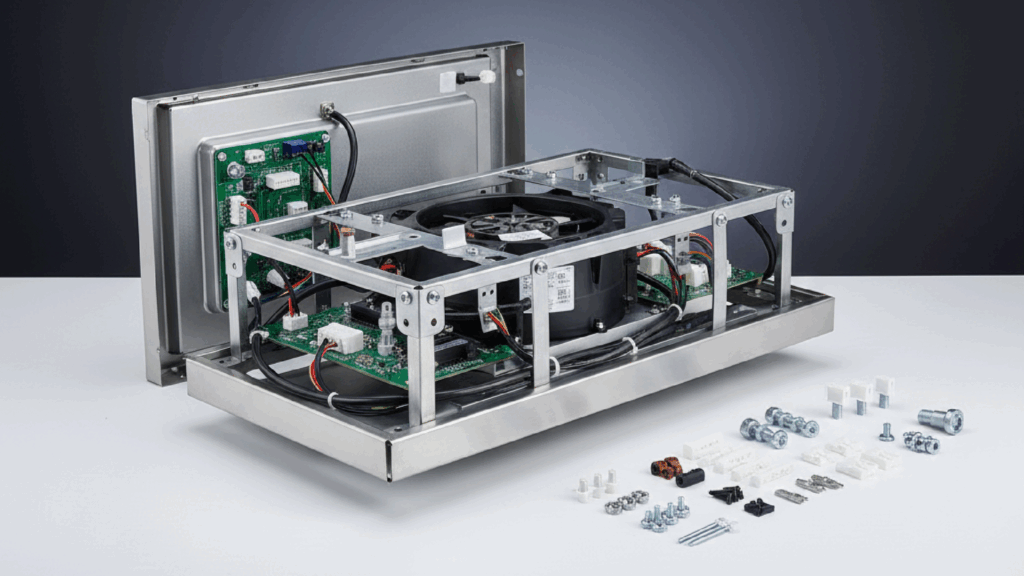
This lesson zooms in on how mechatronic products are physically and electrically held together, from screws and snap-fits to plug-in connectors. Learners examine different joint types and their impact on the ease, safety and quality of disassembly.
SUMMARY
In this lesson, learners focus on assembly joints and connectors as the key interfaces that link parts in mechatronic systems. Through readings and visual examples, they distinguish between removable and non-removable joints, explore common classes of mechanical fasteners (threaded, rapid, standard components) and analyse typical electrical connectors used in real appliances. The module highlights how design choices in joints and connectors affect access, tool choice, disassembly time and the risk of damage. This shared understanding prepares learners to make better tool–fastener decisions and to interpret disassembly procedures more critically in later modules.

About The Author
Claudio Favi is currently a Assistant Professor at the Department of Engineering for Industrial Systems and Technologies – University of Parma (IT). He got a bachelor degree in Mechanical Engineering and a master degree in Materials Engineering. He received his Ph.D. degree in Mechanical Engineering and Management in 2013. His research activity focuses on Design for X methods and tools (i.e., Assembly, Manufacturing, Cost, Disassembly, End-of-life). He works also in the fields of Ecodesign, LCA, & LCC.
Learning outcomes
- Identify and distinguish common mechanical connectors in mechatronic systems, such as screws, bolts, snap-fits, and tabs.
- Identify typical electrical connectors, including faston, ring and fork terminals, pin terminals, and butt connectors, and understand where they are usually used.
- 3. Describe the general steps and key safety precautions involved in disassembling a simple product without damaging components.
Course Content
Topics
Advanced Manufacturing, Mechanics, Electronic
Tags
circular economy
Provided by
-
Univeristy of Parma

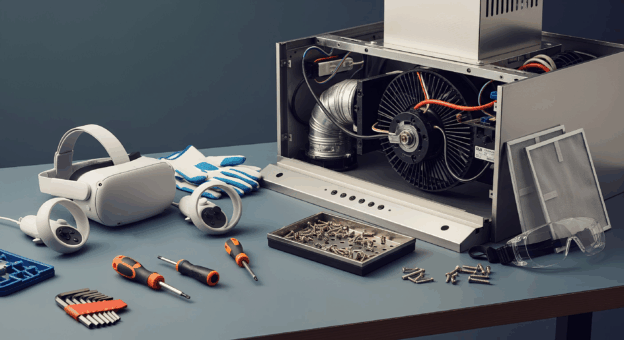

Course Includes
- 1 Quiz
Related
-
 Intermediate
Digital Technologies Enabling Industry 5.0
By Faculty of Engineering of University of PortoThis lesson introduces key digital technologies driving Industry 5.0, such as AI, IoT, and cobotics, highlighting how they enhance efficiency, sustainability, and human-machine collaboration.
Digital learning, Lesson- Quiz1
-
 Intermediate
Augmented Reality Application Development for Equipment Health Monitoring
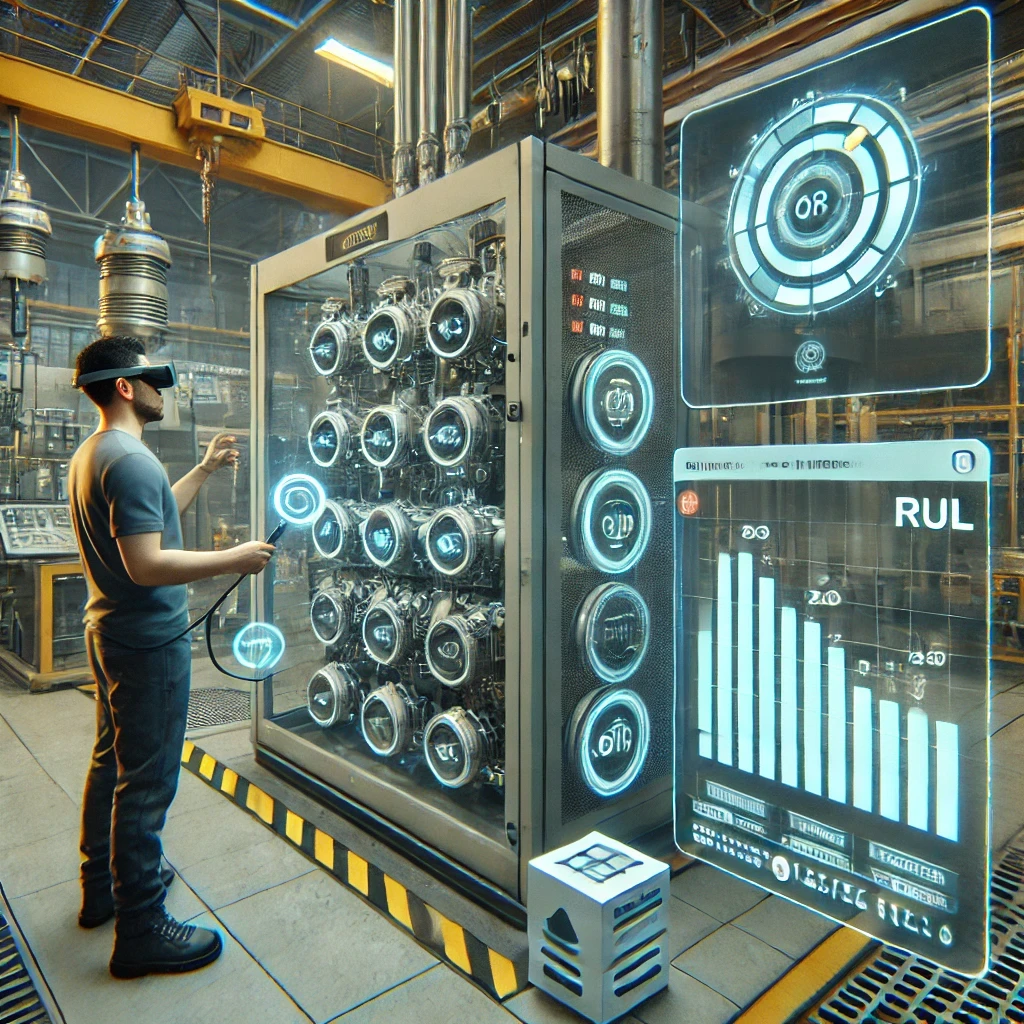
By Laboratory for Manufacturing Systems and Automation of Patras - Laboratory for Manufacturing Systems and Automation of PatrasThis lesson teaches learners how to design Augmented Reality (AR) applications for monitoring equipment health. They will learn to formulate microservices for AR-based monitoring, create data monitoring and visualization workflows, and develop AR modules that provide real-time monitoring of equipment performance.
Digital learning, Lesson -
 Beginner
3D printing in everyday life
By University of TartuThis learning path included an exploration of how 3D printing is used in different fields in everyday life. It featured four classroom activities, a challenge guide for students and a quiz.
Digital learning, Path- Course Certificate
49 € -
 Intermediate
NC machining verification by simulation of digital twin
By Czech Technical UniversityThe trainee will try to create and perform their own machining simulation in digital twin simulating software and will be assessed based on their results to confirm that they acquired needed knowledge and skills
Digital learning, Path- Course Certificate
69 € -
 Beginner
3D printing basics for teachers
By University College DublinThis introduction to 3D printing included a guide to getting to know and care for your printer, essential tips for successful 3D design and print, how to slice design files, and an exploration of curriculum links.
Digital learning, Path- Course Certificate
49 € -
 Beginner
Roboto programavimas regėjimo patikrinimui
By Lukasiewicz ITEEŠis robotikos mokymo kelias apima tokias temas kaip robotų tipai, jų taikymas, robotų judėjimas, komunikacijos metodai, bendradarbiavimo algoritmai ir veiklos sauga. Idealiai tinka studentams ir profesionalams, norintiems įgyti išsamų supratimą apie robotiką.
Digital learning, Path- Course Certificate
49 € -
Intermediate
Programowanie robota do inspekcji wizyjnej
By Lukasiewicz ITEETa ścieżka szkoleniowa dotycząca robotyki obejmuje takie tematy, jak rodzaje robotów, ich zastosowania, ruch robotów, metody komunikacji, algorytmy współpracy i bezpieczeństwo działania. Idealny dla studentów i profesjonalistów, którzy chcą uzyskać kompleksowe zrozumienie robotyki.
Digital learning, Path- Course Certificate
49 € -
 Advanced
Predictive Maintenance for data engineers
By Laboratory for Manufacturing Systems and Automation of Patras - BIBAThe "Predictive Maintenance for data engineers" learning path discusses useful technological aspects that will facilitate industrial upgrade of a factory's maintenance approach. Focus of this path will be directed to data engineers and providing them with essential information on their way to their first involvement with Predictive Maintenance.
Digital learning, Path- Course Certificate
89 € -
 Beginner
Sustainable MedTech Product Development
By Politecnico di Torino - TEM - Stryker Trauma GmbHThis learning path looks at medical device product development through the lens of Sustainability and the Circular Economy
Digital learning, Path- Course Certificate
49 € -
Intermediate
Predictive Maintenance for digitally experienced operators
By Laboratory for Manufacturing Systems and Automation of Patras - BIBAThe "Predictive Maintenance for digitally experienced operators" learning path discusses useful technological aspects that will facilitate industrial upgrade of a factory's maintenance approach. Focus of this path will be directed to digitally experienced operators and providing them with essential information on their way to their first involvement with Predictive Maintenance.
Digital learning, Path- Course Certificate
69 € -
Intermediate
Predictive Maintenance for digitally inexperienced operators
By Laboratory for Manufacturing Systems and Automation of Patras - BIBAThe "Predictive Maintenance for digitally inexperience operators" learning path discusses useful technological aspects that will facilitate industrial upgrade of a factory's maintenance approach. Focus of this path will be directed to digitally inexperienced operators and providing them with essential information on their way to their first involvement with Predictive Maintenance.
Digital learning, Path- Course Certificate
69 € -
Intermediate
Predictive Maintenance for digitally inexperienced maintenance technicians
By Laboratory for Manufacturing Systems and Automation of Patras - BIBAThe "Predictive Maintenance for digitally inexperienced maintenance technicians" learning path discusses useful technological aspects that will facilitate industrial upgrade of a factory's maintenance approach. Focus of this path will be directed to digitally inexperienced maintenance technicians and providing them with essential information on their way to their first involvement with Predictive Maintenance.
Digital learning, Path- Course Certificate
69 €