

Type of course:
Digital learning, Lesson
Language:
EN
Duration:
0 hours, 20 minutes
Workload:
1 hour
Proficiency:
Intermediate
Target:
Manager, Professionals, Students
SUMMARY
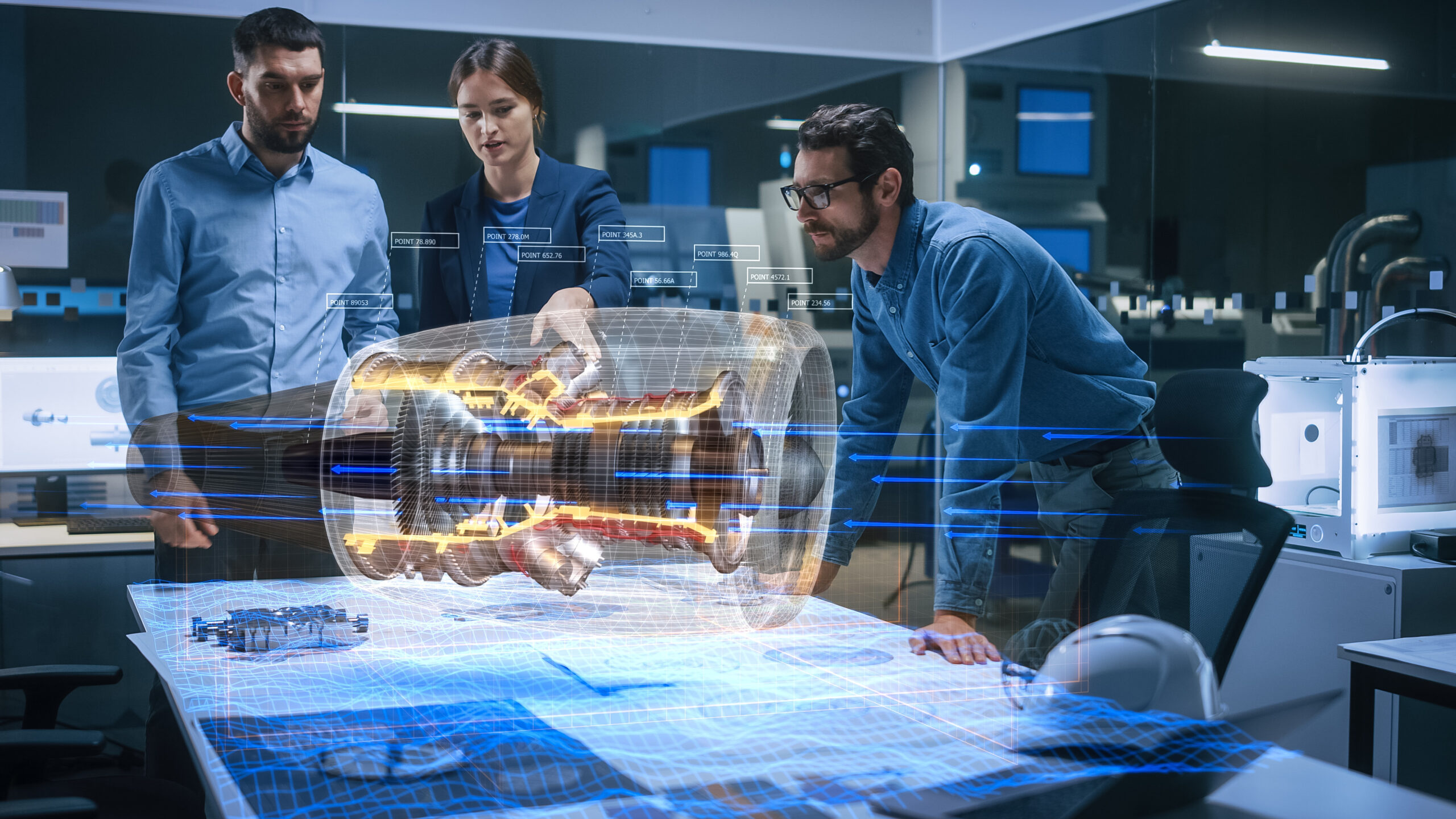
Modern manufacturing systems must operate under increasing uncertainty caused by fluctuating market demand, supply chain disruptions, and rapid product innovation cycles. Digital Twins have emerged as a key Industry 4.0 technology supporting resilient and adaptive production environments.
This lesson introduces Digital Twins as dynamic digital representations of assets, processes, and production systems that enable monitoring, simulation, and decision support. Learners explore how Digital Twins evolved from traditional simulation models and how multi-level implementations support rapid reconfiguration and virtual validation of manufacturing changes.
The lesson also introduces related enabling concepts such as Cyber-Physical Systems and IoT connectivity, highlighting their role in establishing data-driven manufacturing environments capable of responding to disruptions and operational variability.
About The Author
This course was developed within the EU-funded R3GROUP project, as part of Task 5.4: Social Impact Management, to raise the awareness about resilience strategies and technologies for reconfiguration in different manufacturing sectors. The authors bring combined expertise in engineering, innovation, and industrial transformation, ensuring a balanced approach between theoretical foundations and practical application. The R3GROUP project has received funding from the European Union’s Horizon Europe programme under grant agreement No. 101091869. Views and opinions expressed are however those of the author(s) only and do not necessarily reflect those of the European Union. Neither the European Union nor the granting authority can be held responsible for them.
Learning outcomes
- By the end of this lesson learners will be able to explain how Digital Twins evolved from traditional simulation toward enabling adaptive Industry 4.0 manufacturing systems.
- By the end of this lesson, students will be able to differentiate between product, process, and system level Digital Twins and their role in supporting manufacturing reconfiguration.
- By the end of this lesson, students will be able to describe how Digital Twins integrate with IoT and Cyber-Physical Systems to support monitoring, virtual testing, and resilient decision-making.
Course Content
Topics
Automation and Robotics, Digital Transformation, Internet of Things (IoT), Artificial Intelligence (AI), Big Data, Digital Twin
Provided by
-
EIT Manufacturing

Related
-
 Intermediate
Augmenting Workers
By Faculty of Engineering of University of PortoThis lesson discusses technologies that enhance human capabilities in the workplace, such as exoskeletons and augmented reality, empowering workers to perform complex tasks more efficiently and safely.
Digital learning, Lesson- Quiz1
-
 Intermediate
Human-Robot Collaboration for Assembly/Disassembly
By Faculty of Engineering of University of PortoThis lesson examines the integration of COBOTs (collaborative robots) in industrial processes, explaining how humans and robots can safely and efficiently work together in tasks like assembly and disassembly.
Digital learning, Lesson- Quiz1
-
 Intermediate
Data Analytics for Energy Efficiency and Sustainability
By Faculty of Engineering of University of PortoThis lesson focuses on using real-time data analytics to optimize energy usage in industrial settings, reducing waste, and improving sustainability through smart energy management systems.
Digital learning, Lesson- Quiz1
-
 Intermediate
Augmented Reality Application Development for Equipment Health Monitoring
By Laboratory for Manufacturing Systems and Automation of Patras - Laboratory for Manufacturing Systems and Automation of PatrasThis lesson teaches learners how to design Augmented Reality (AR) applications for monitoring equipment health. They will learn to formulate microservices for AR-based monitoring, create data monitoring and visualization workflows, and develop AR modules that provide real-time monitoring of equipment performance.
Digital learning, Lesson -
 Intermediate
Introduction to MQTT
By Beia Consult InternationalMessage Queuing Telemetry Transport (MQTT) is a lightweight messaging protocol for Internet of Things (IoT), using a publish/subscribe model for efficient, real-time communication. Common uses include smart homes, industrial automation, and environmental monitoring.
Digital learning, Lesson- Quiz1
-
 Intermediate
Introduction to Time Series Databases
By Beia Consult InternationalTime Series Databases (TSDBs) efficiently store and retrieve time-stamped data for applications like IoT, monitoring, and finance. They come in SQL-based (e.g., MySQL, PostgreSQL) for structured queries and NoSQL-based (e.g., InfluxDB, MongoDB) for scalability and high-velocity data handling. The choice depends on data volume, query complexity, and scalability needs.
Digital learning, Lesson- Quiz1
-
 Intermediate
Introduction to Data Visualisation
By Beia Consult InternationalData visualization simplifies complex data through graphs, charts, and dashboards, enabling quick insights for decision-making. Grafana, a powerful open-source tool, supports real-time monitoring, interactive dashboards, and multi-source data integration for IoT, business intelligence, and analytics.
Digital learning, Lesson- Quiz1
-
 Intermediate
How Grafana Is Used in IoT Applications
By Beia Consult InternationalThis course explores how Grafana enhances IoT monitoring with real-time dashboards. Learn to integrate data sources, configure visualizations, and set up alerts for insights in smart homes, industrial IoT, and environmental monitoring.
Digital learning, Lesson- Quiz1
-
 Beginner
Track and Trace with Radio Frequency Identification
By JOANNEUM RESEARCHThis learning path is designed to provide students with an introduction to the concepts of Radio Frequency Identification technology for use in track and trace applications. This includes detailed explanations and descriptions of RFID readers, tags and Near Field Communication (NFC) technology.
Digital learning, Path- Course Certificate
49 € -
 Beginner
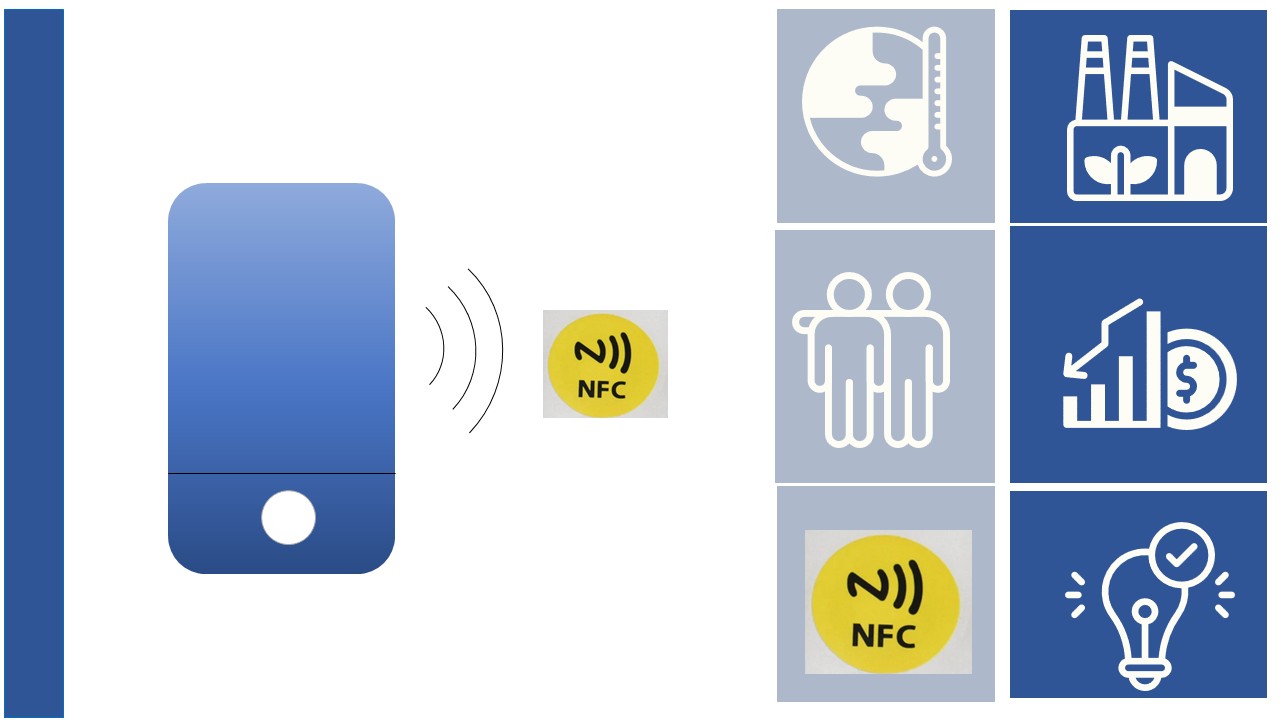
Near Field Communication
By JOANNEUM RESEARCHThis lesson explains Near Field Communication (NFC). NFC is a technology that allows you to interact securely with the world around you by simply touching it. NFC wireless technology is found in billions of smartphones, tablets, consumer and industrial electronics.
Digital learning, Lesson- Quiz1
-
 Beginner
Radio Frequency Identification Tags
By JOANNEUM RESEARCHIn this lesson, we will describe Radio Frequency Identification (RFID) tags. RFID tags are small, wireless devices that use radio waves to identify and track objects. They consist of a microchip and an antenna, and can be attached to or embedded in a variety of objects to enable automated data collection and management. There are many different RFID tags to choose from, depending on the application and environmental factors.
Digital learning, Lesson- Quiz1
-
Beginner
Introduction in Radio Frequency Identification Technology
By JOANNEUM RESEARCHThe learning material starts with asset tracking with Radio Frequency Identification (RFID). Asset tracking is an increasingly important key technology for industrial manufacturing companies. Digital asset tracking brings greater transparency to the production process, allowing you to see the progress and status of your production line at any time. In this learning resource, we explain exactly what the concept means and what the benefits are for companies.In this lesson, we will introduce the basic key concepts of RFID technology.
Digital learning, Lesson- Quiz1