


Type of course:
Digital learning, Lesson
Language:
EN
Duration:
20 minutes
Proficiency:
Beginner
Target:
Professionals
This lesson has been developed as part of the ‘Manufacturing a Healthy Future’ programme, which focuses on strengthening the engagement of primary schools with STEM and manufacturing. The programme utilises 3D printing as an exemplar technology to promote the exciting career opportunities in manufacturing, while also focusing on sustainability and diversity in STEM.
SUMMARY
This unit introduces students to 3D solid modeling using TinkerCAD, a standard CAD (Computer-Aided Design) software. Key learning objectives include:
- Navigating the TinkerCAD Interface: Students will get acquainted with the interface of TinkerCAD and will apply this knowledge to view and manipulate models in a 3D space.
- Object Manipulation: They will be able to zoom in, zoom out, and rotate the view to explore and interact with 3D objects.
- Designing Basic Shapes: Students will create simple solid shapes and learn to combine them to form more complex assemblies.
- Creating Final Models: By grouping and assembling multiple 3D objects, they will be able to design complete models.
By the end of the unit, students will be able to apply this knowledge to successfully use the essential tools and features of TinkerCAD, enabling them to create, manipulate, and assemble basic 3D models, as well as design patterns through duplication and grouping.


About The Authors
Panagiotis Stavropoulos: Owns a BEng in Mechanical Engineering and an MSc in Advanced Mechanical Engineering from the University of Sussex-UK, a PhD in Engineering from the Dept. of Mechanical Engineering and Aeronautics, University of Patras-GREECE and a MBA from the HoU-GREECE. He worked among others, as a Design Engineer (2000 – 2001) in Flowtronic Pumps Ltd – UK, a Research Engineer (2001-2007) & Research Project Manager (2007 – 2010) in Laboratory of Manufacturing Systems & Automation and as a WCP & Production Manager (2010-2014) at Crown Holdings Inc., Bevcan – Europe and Middle East Division. From 2014 – 2018 he was a Lecturer in Hellenic Air Force Academy, Dept. of Aeronautical Studies. He is an Assistant Professor in the Dept. of Mechanical Engineering & Aeronautics, University of Patras since September 2018. His main research interests are focused in the field of conventional/non-conventional/micro manufacturing processes, sustainable manufacturing, CAD/RP/RM/AM systems and machine tool design and circular economy. He speaks fluently English and German. He has more than 200 publications (fifty (50) publications in international refereed scientific journals, nine (9) publications in Greek refereed scientific journals, eight (8) chapters in books, one hundred thirty (130) publications in conference proceedings with review in the full paper. His scientific work has been acknowledged by the international scientific community as the total number of unique citations of his research publications is 4300 (based on Scopus and Google Scholar citation indices).
Panagis Foteinopoulos: Panagis Foteinopoulos is a highly motivated mechanical engineer following a career in research and development. Expert in process simulation, and very experienced in European research projects. Able to perform under strict deadlines, with excellent technical writing and communication skills. He owns a Diploma (BEng with an Incorporated MSc) in Mechanical Engineering and Aeronautics from the University of Patras-Greece (grade 8.44/10), and a PhD in Computational and Empirical Modeling of Additive Manufacturing Processes from the Dept. of Mechanical Engineering and Aeronautics, University of Patras-Greece (Grade: Excellent). He worked as an undergraduate (2010-2014) and postgraduate (2014-2019) research mechanical engineer in the Laboratory of Manufacturing Systems & Automation of the Dept. of Mechanical Engineering and Aeronautics, University of Patras. During his military service (2019-2020), he undertook several engineering projects for the Greek Army. Between 2020-2022 he worked in procurement/supply chain optimization for tanker vessels. From 2022 to the present he has been working as a postdoctoral research engineer in the Laboratory of Manufacturing Systems & Automation of the Dept. of Mechanical Engineering and Aeronautics, University of Patras. He got two scholarships during his undergraduate studies in Mechanical Engineering as the best and second-best student of his academic year by the State Scholarships Foundation of Greece (I.K.Y.). Since 2010 he has been involved in ten (11) RTD projects funded by the EC, acting as a Research Engineer, Technical and/or Project Manager, in the field of Advanced Manufacturing Processes and Education. He has (20) publications, eleven (11) publications in international refereed scientific journals and nine (9) publications in conference proceedings with a review in the full paper. His scientific work has been acknowledged by the international scientific community since the total number of unique citations of his research publications is 882 (based on the Google Scholar citation index), with an h-index of 15, and an i10-index of 17.
Learning outcomes
- Acquire basic knowledge about 3D Computer-Aided Design (CAD), specifically TinkerCAD
- Comprehend TinkerCAD's key functionalities (interface, navigation, model manipulation in 3D space, design of basic shapes and combination of basic shapes)
- At the end of this unit, the learners will be able to apply the acquired knowledge in TinkerCAD to navigate in the software, manipulate models in 3D space, design basic shapes and combine basic shapes.
Course Content
Topics
Advanced Manufacturing, Additive Manufacturing
Provided by
 +57
enrolled
+57
enrolled
Related
-
 Intermediate
Digital Technologies Enabling Industry 5.0
By Faculty of Engineering of University of PortoThis lesson introduces key digital technologies driving Industry 5.0, such as AI, IoT, and cobotics, highlighting how they enhance efficiency, sustainability, and human-machine collaboration.
Digital learning, Lesson- Quiz1
-
 Intermediate
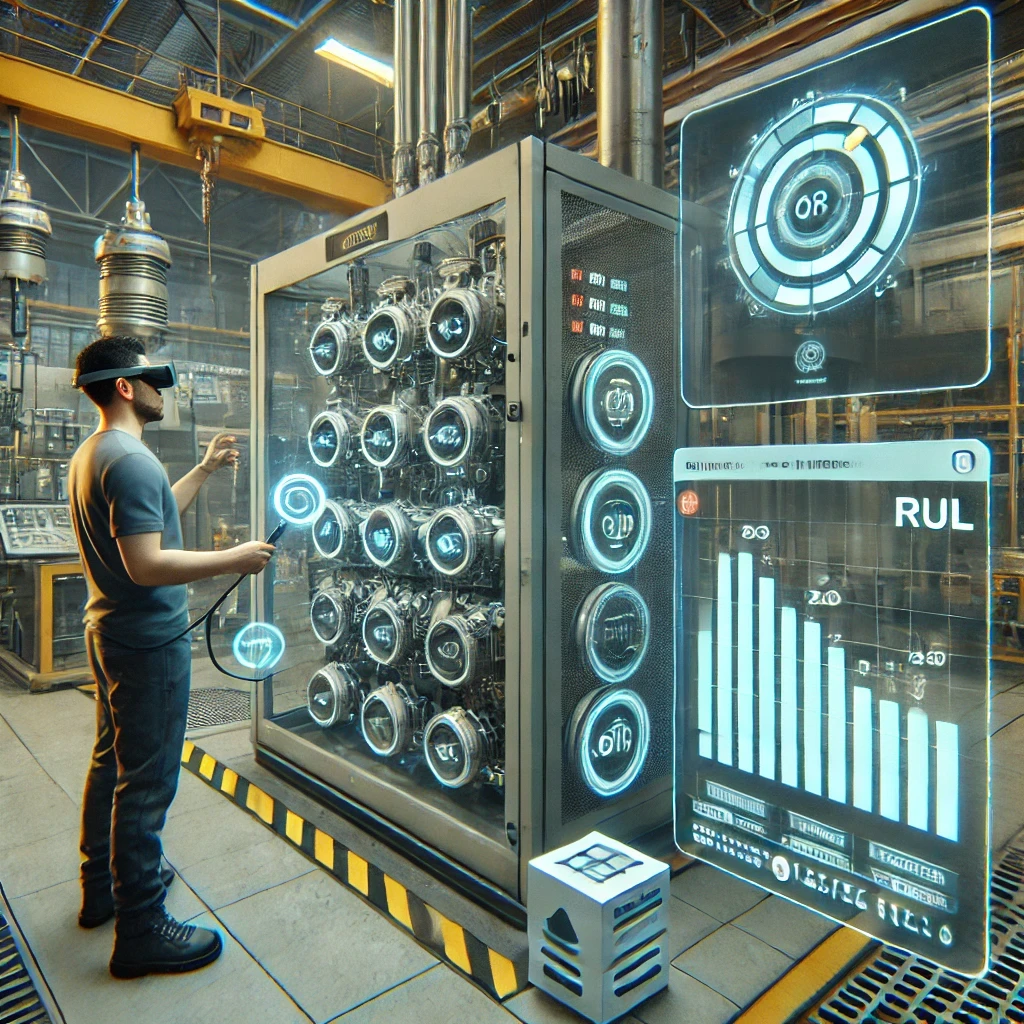
Augmented Reality Application Development for Equipment Health Monitoring
By Laboratory for Manufacturing Systems and Automation of Patras - Laboratory for Manufacturing Systems and Automation of PatrasThis lesson teaches learners how to design Augmented Reality (AR) applications for monitoring equipment health. They will learn to formulate microservices for AR-based monitoring, create data monitoring and visualization workflows, and develop AR modules that provide real-time monitoring of equipment performance.
Digital learning, Lesson -
 Beginner
3D printing in everyday life
By University of TartuThis learning path included an exploration of how 3D printing is used in different fields in everyday life. It featured four classroom activities, a challenge guide for students and a quiz.
Digital learning, Path- Course Certificate
49 € -
 Intermediate
NC machining verification by simulation of digital twin
By Czech Technical UniversityThe trainee will try to create and perform their own machining simulation in digital twin simulating software and will be assessed based on their results to confirm that they acquired needed knowledge and skills
Digital learning, Path- Course Certificate
69 € -
 Beginner
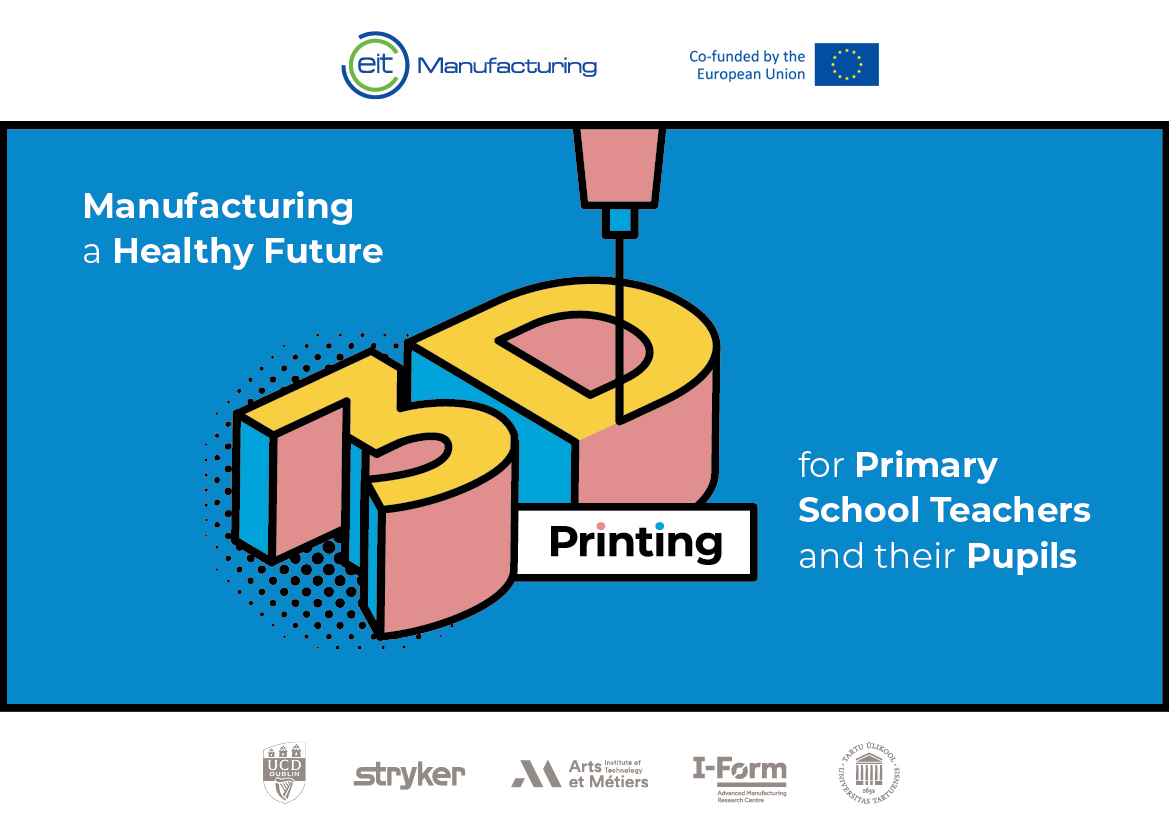
3D printing basics for teachers
By University College DublinThis introduction to 3D printing included a guide to getting to know and care for your printer, essential tips for successful 3D design and print, how to slice design files, and an exploration of curriculum links.
Digital learning, Path- Course Certificate
49 € -
 Beginner
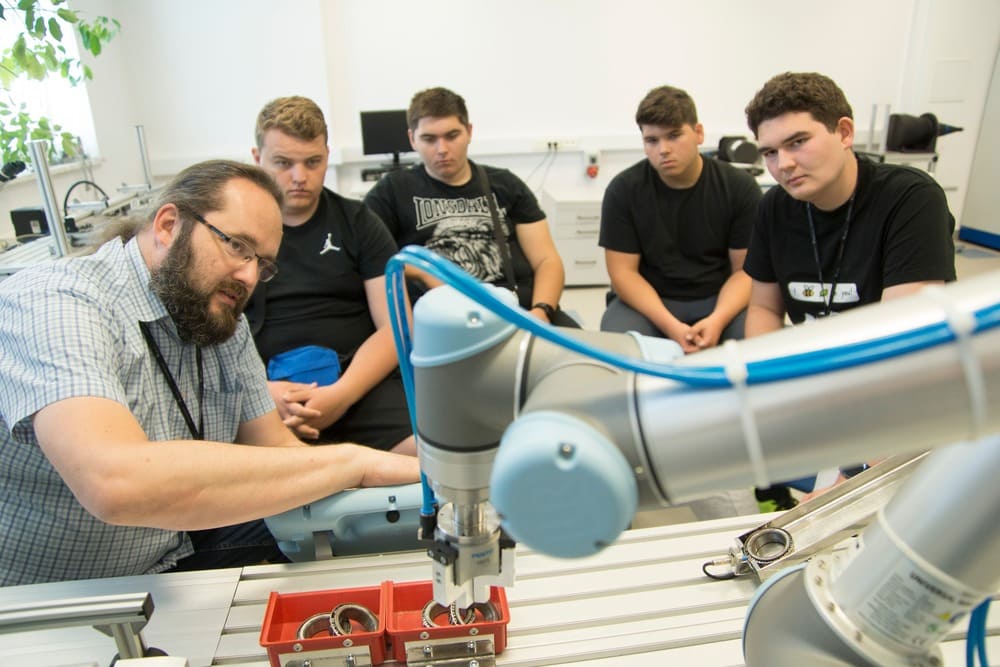
Roboto programavimas regėjimo patikrinimui
By Lukasiewicz ITEEŠis robotikos mokymo kelias apima tokias temas kaip robotų tipai, jų taikymas, robotų judėjimas, komunikacijos metodai, bendradarbiavimo algoritmai ir veiklos sauga. Idealiai tinka studentams ir profesionalams, norintiems įgyti išsamų supratimą apie robotiką.
Digital learning, Path- Course Certificate
49 € -
Intermediate
Programowanie robota do inspekcji wizyjnej
By Lukasiewicz ITEETa ścieżka szkoleniowa dotycząca robotyki obejmuje takie tematy, jak rodzaje robotów, ich zastosowania, ruch robotów, metody komunikacji, algorytmy współpracy i bezpieczeństwo działania. Idealny dla studentów i profesjonalistów, którzy chcą uzyskać kompleksowe zrozumienie robotyki.
Digital learning, Path- Course Certificate
49 € -
 Advanced
Predictive Maintenance for data engineers
By Laboratory for Manufacturing Systems and Automation of Patras - BIBAThe "Predictive Maintenance for data engineers" learning path discusses useful technological aspects that will facilitate industrial upgrade of a factory's maintenance approach. Focus of this path will be directed to data engineers and providing them with essential information on their way to their first involvement with Predictive Maintenance.
Digital learning, Path- Course Certificate
89 € -
 Beginner
Sustainable MedTech Product Development
By Politecnico di Torino - TEM - Stryker Trauma GmbHThis learning path looks at medical device product development through the lens of Sustainability and the Circular Economy
Digital learning, Path- Course Certificate
49 € -
Intermediate
Predictive Maintenance for digitally experienced operators
By Laboratory for Manufacturing Systems and Automation of Patras - BIBAThe "Predictive Maintenance for digitally experienced operators" learning path discusses useful technological aspects that will facilitate industrial upgrade of a factory's maintenance approach. Focus of this path will be directed to digitally experienced operators and providing them with essential information on their way to their first involvement with Predictive Maintenance.
Digital learning, Path- Course Certificate
69 € -
Intermediate
Predictive Maintenance for digitally inexperienced operators
By Laboratory for Manufacturing Systems and Automation of Patras - BIBAThe "Predictive Maintenance for digitally inexperience operators" learning path discusses useful technological aspects that will facilitate industrial upgrade of a factory's maintenance approach. Focus of this path will be directed to digitally inexperienced operators and providing them with essential information on their way to their first involvement with Predictive Maintenance.
Digital learning, Path- Course Certificate
69 € -
Intermediate
Predictive Maintenance for digitally inexperienced maintenance technicians
By Laboratory for Manufacturing Systems and Automation of Patras - BIBAThe "Predictive Maintenance for digitally inexperienced maintenance technicians" learning path discusses useful technological aspects that will facilitate industrial upgrade of a factory's maintenance approach. Focus of this path will be directed to digitally inexperienced maintenance technicians and providing them with essential information on their way to their first involvement with Predictive Maintenance.
Digital learning, Path- Course Certificate
69 €