

Type of course:
Digital learning, Lesson
Language:
EN
Duration:
15 minutes
Proficiency:
Intermediate
Target:
Manager, Professionals, Workers
SUMMARY
In quality control, having enough diverse data is essential for training robust models that can detect even the most subtle defects. But what if your dataset is limited or lacks variety?
This lesson introduces foundational data augmentation techniques such as rotation, scaling, flipping, and color adjustments, which can significantly enhance visual datasets for quality control and anomaly detection. We’ll evaluate the impact of these augmentations by comparing performance metrics before and after applying them, showcasing how they improve model accuracy and robustness.
Furthermore, we’ll discuss how augmentation techniques can simulate real-world manufacturing defects and various environmental conditions, helping your models become better at recognizing subtle anomalies that might otherwise go undetected. By the end of the lesson, you’ll understand how to use data augmentation to transform limited datasets into valuable, high-performing resources for improving quality control workflows in manufacturing.

About The Author
Dilek Dustegor is a Professor of Computing Science at the University of Groningen in the Netherlands. She is interested in bridging the gaps between research, development and implementation using AI and automation. She is pursuing research about modeling, design and analysis of large scale / networked systems using Internet of Things (IoT) and Machine Learning (ML) techniques, with a special interest in smart city applications. She is a seasoned educator, and loves using the newest educational technologies for an enhanced learning experience.
Learning outcomes
- By the end of this lesson, learners will be able to discuss foundational data augmentation techniques to enhance limited visual datasets, including transformations like rotation, scaling, flipping, and color adjustments, for improved model performance in quality control and anomaly detection.
- By the end of this lesson, learners will be able to evaluate the impact of data augmentations on model accuracy and robustness by comparing performance metrics before and after augmentation, enabling data-driven improvements to visual inspection workflows in manufacturing.
- By the end of this lesson, learners will be able to use augmentation techniques to simulate manufacturing defects and different conditions, helping models better recognize subtle anomalies.
Course Content
Topics
Automation and Sensoring, Automation and Robotics, Digital Transformation, Machine Learning
Provided by
-
University of Groningen


Course Includes
- 1 Quiz
Related
-
 Intermediate
Augmenting Workers
By Faculty of Engineering of University of PortoThis lesson discusses technologies that enhance human capabilities in the workplace, such as exoskeletons and augmented reality, empowering workers to perform complex tasks more efficiently and safely.
Digital learning, Lesson- Quiz1
-
 Intermediate
Human-Robot Collaboration for Assembly/Disassembly
By Faculty of Engineering of University of PortoThis lesson examines the integration of COBOTs (collaborative robots) in industrial processes, explaining how humans and robots can safely and efficiently work together in tasks like assembly and disassembly.
Digital learning, Lesson- Quiz1
-
 Intermediate
Data Analytics for Energy Efficiency and Sustainability
By Faculty of Engineering of University of PortoThis lesson focuses on using real-time data analytics to optimize energy usage in industrial settings, reducing waste, and improving sustainability through smart energy management systems.
Digital learning, Lesson- Quiz1
-
 Intermediate
Augmented Reality Application Development for Equipment Health Monitoring
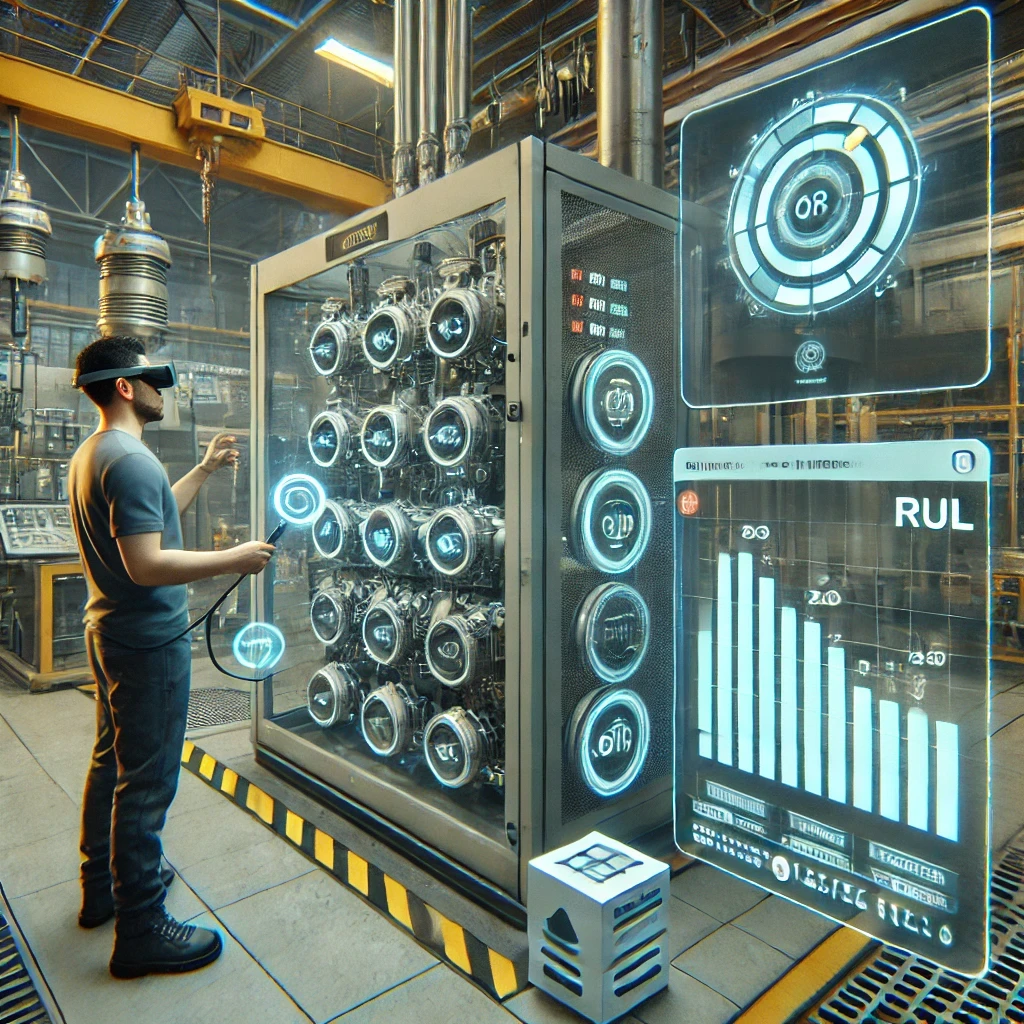
By Laboratory for Manufacturing Systems and Automation of Patras - Laboratory for Manufacturing Systems and Automation of PatrasThis lesson teaches learners how to design Augmented Reality (AR) applications for monitoring equipment health. They will learn to formulate microservices for AR-based monitoring, create data monitoring and visualization workflows, and develop AR modules that provide real-time monitoring of equipment performance.
Digital learning, Lesson -
 Intermediate
Introduction to MQTT
By Beia Consult InternationalMessage Queuing Telemetry Transport (MQTT) is a lightweight messaging protocol for Internet of Things (IoT), using a publish/subscribe model for efficient, real-time communication. Common uses include smart homes, industrial automation, and environmental monitoring.
Digital learning, Lesson- Quiz1
-
 Intermediate
Introduction to Time Series Databases
By Beia Consult InternationalTime Series Databases (TSDBs) efficiently store and retrieve time-stamped data for applications like IoT, monitoring, and finance. They come in SQL-based (e.g., MySQL, PostgreSQL) for structured queries and NoSQL-based (e.g., InfluxDB, MongoDB) for scalability and high-velocity data handling. The choice depends on data volume, query complexity, and scalability needs.
Digital learning, Lesson- Quiz1
-
 Intermediate
Introduction to Data Visualisation
By Beia Consult InternationalData visualization simplifies complex data through graphs, charts, and dashboards, enabling quick insights for decision-making. Grafana, a powerful open-source tool, supports real-time monitoring, interactive dashboards, and multi-source data integration for IoT, business intelligence, and analytics.
Digital learning, Lesson- Quiz1
-
 Intermediate
How Grafana Is Used in IoT Applications
By Beia Consult InternationalThis course explores how Grafana enhances IoT monitoring with real-time dashboards. Learn to integrate data sources, configure visualizations, and set up alerts for insights in smart homes, industrial IoT, and environmental monitoring.
Digital learning, Lesson- Quiz1
-
 Beginner
Track and Trace with Radio Frequency Identification
By JOANNEUM RESEARCHThis learning path is designed to provide students with an introduction to the concepts of Radio Frequency Identification technology for use in track and trace applications. This includes detailed explanations and descriptions of RFID readers, tags and Near Field Communication (NFC) technology.
Digital learning, Path- Course Certificate
49 € -
 Beginner
Near Field Communication
By JOANNEUM RESEARCHThis lesson explains Near Field Communication (NFC). NFC is a technology that allows you to interact securely with the world around you by simply touching it. NFC wireless technology is found in billions of smartphones, tablets, consumer and industrial electronics.
Digital learning, Lesson- Quiz1
-
 Beginner
Radio Frequency Identification Tags
By JOANNEUM RESEARCHIn this lesson, we will describe Radio Frequency Identification (RFID) tags. RFID tags are small, wireless devices that use radio waves to identify and track objects. They consist of a microchip and an antenna, and can be attached to or embedded in a variety of objects to enable automated data collection and management. There are many different RFID tags to choose from, depending on the application and environmental factors.
Digital learning, Lesson- Quiz1
-
Beginner
Introduction in Radio Frequency Identification Technology
By JOANNEUM RESEARCHThe learning material starts with asset tracking with Radio Frequency Identification (RFID). Asset tracking is an increasingly important key technology for industrial manufacturing companies. Digital asset tracking brings greater transparency to the production process, allowing you to see the progress and status of your production line at any time. In this learning resource, we explain exactly what the concept means and what the benefits are for companies.In this lesson, we will introduce the basic key concepts of RFID technology.
Digital learning, Lesson- Quiz1